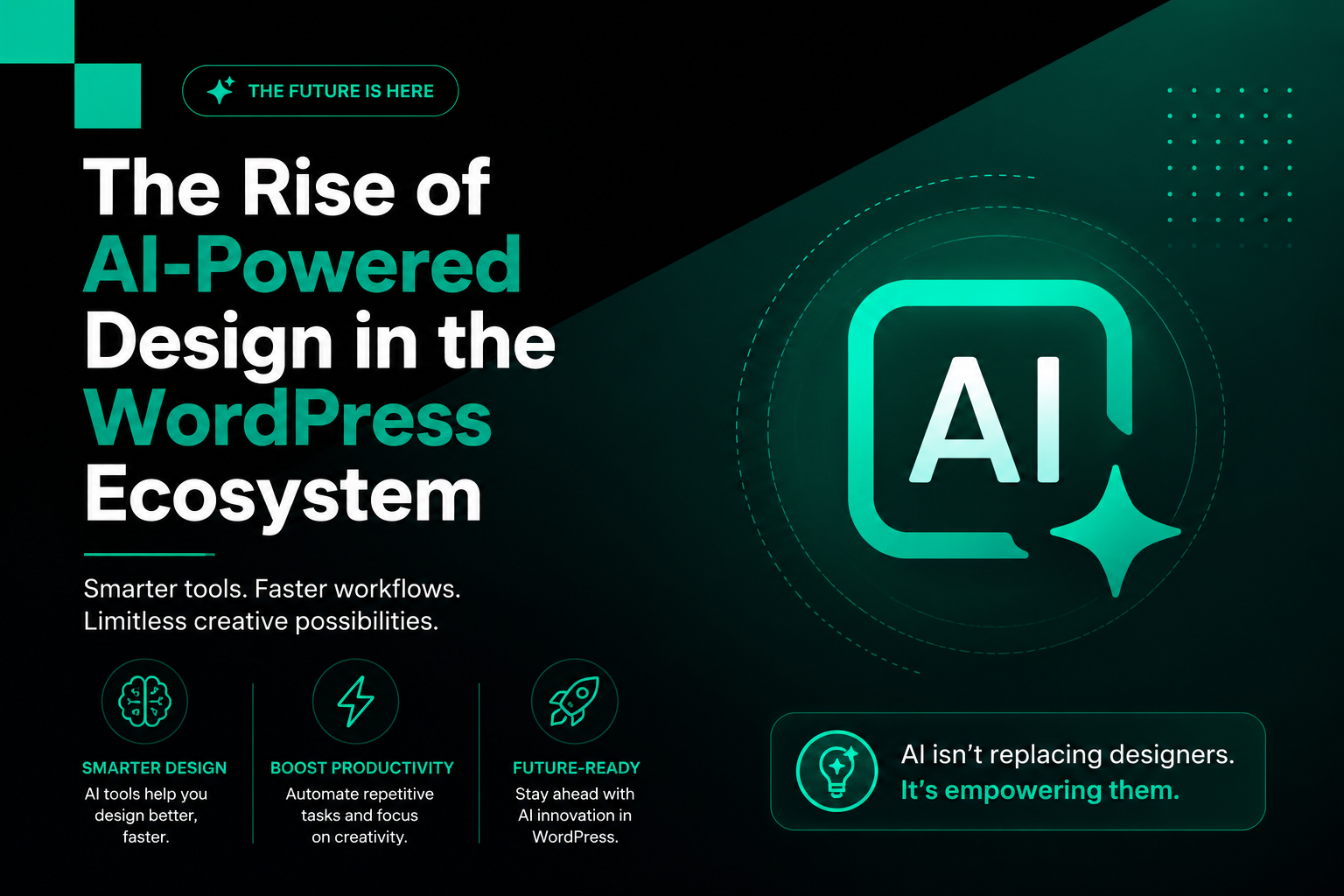
Artificial Intelligence is changing the way we design, build and manage websites. Tasks that used to take hours like creating layouts writing content and making images can now be done in minutes with AI-powered tools.
In the WordPress world AI is no longer an idea for the future. It is now a part of how we design websites. AI helps freelancers, agencies and businesses make websites faster than ever before.
In this article we will look at what’s driving AI-powered design how top WordPress platforms are using AI and what the future holds for people who make websites.
Why AI Is Changing WordPress Design
The reason AI is so popular in WordPress is that it makes things simpler and helps people get more done.
Website creators have a lot of jobs including:
- Designing page layouts
- Writing website copy
- Making assets
- Making sure the user experience is good
- Customizing code
- Managing SEO
AI tools make these tasks easier by acting like helpers that can make, suggest, automate and optimize work across the whole process of building a website.
This means designers can spend time on boring tasks and more time on strategy, creativity and user experience.
The Main Drivers of AI-Powered Design
1. Natural Language Generation
One of the advances in AI-powered web design is Natural Language Generation.
Of building every part of a website by hand users can just describe what they want using simple language.
For example:
“Create a homepage for a digital marketing agency with a hero section, services grid, testimonials and call-to-action.”
AI can instantly make layouts, content suggestions and design structures based on what the user wants.
This makes it easier for beginners to learn and helps professionals get projects done faster.
The good things about this include:
- Making websites faster
- Reducing design bottlenecks
- Making it easier to work with clients
- Helping with content ideas
- Making prototypes quickly
The result is an intuitive way to build websites where ideas can be turned into visual designs with minimal effort.
2. Automated Content & Imagery
Making content is often one of the time-consuming parts of launching a website.
AI-powered tools can now make:
- Headlines
- Product descriptions
- Blog introductions
- Calls-to-action
- SEO meta descriptions
- FAQ sections
Also AI image generation tools can make custom graphics, illustrations, backgrounds and marketing visuals without needing stock photo libraries.
This is especially helpful for:
- businesses
- Freelancers
- Startup founders
- Ecommerce stores
- Marketing agencies
of waiting for content writers and designers to finish assets teams can make high-quality drafts instantly and refine them later.
The combination of AI-made text and visuals speeds up website production timelines.
3. Code Control
While no-code builders have made WordPress more accessible customizing things still often requires coding knowledge.
AI is helping bridge this gap.
Modern AI assistants can make:
- Custom CSS
- HTML snippets
- JavaScript interactions
- WordPress functions
- Elementor custom code
- WooCommerce customizations
Developers can use AI to automate coding tasks while non-technical users can add advanced functionality through simple prompts.
For example:
“Create CSS that adds a hover animation to service cards.”
of searching through documentation or forums users get usable code within seconds.
This makes it possible for an audience to create highly customized websites without needing to be experts in programming.
Leading Platforms & Innovations
AI is being used more and more in the WordPress ecosystem with both page builders and specialized plugins introducing new features.
Elementor Website Builder
Elementor has become one of the aggressive adopters of AI technology in WordPress.
Its AI-powered capabilities help users:
- Make website copy
- Create custom CSS
- Produce code snippets
- Improve existing content
- Translate text
- Make images
- Build layouts
By putting AI directly into the editing experience Elementor lets creators stay in their workflow without switching between multiple external tools.
This seamless integration helps agencies and freelancers deliver projects efficiently while keeping creative control.
As AI capabilities keep evolving Elementor is positioning itself as a hub for AI-assisted website creation.
Native Foundations
WordPress itself is slowly building the foundation for AI adoption.
Several core trends are supporting this evolution:
Block-Based Editing
The Gutenberg editor provides an architecture that lets AI-powered enhancements be integrated directly into content creation workflows.
API Accessibility
WordPresss open architecture lets developers connect AI services, language models and automation tools through plugins and custom integrations.
Workflow Automation
As AI becomes deeply integrated into WordPress users can expect smarter publishing workflows, content recommendations and website optimization tools.
These foundations create an environment where AI innovation can flourish without needing changes to the core WordPress experience.
Specialized Tools
Beyond page builders, a growing ecosystem of specialized AI tools is emerging.
Popular categories include:
AI Content Assistants
These tools focus on:
- Blog generation
- SEO optimization
- Content enhancement
- Keyword suggestions
- Readability improvements
AI Image Generators
Designed to create:
- Hero images
- Marketing graphics
- Custom illustrations
- Product visuals
- media assets
AI Chatbots
These solutions improve:
- Customer support
- Lead generation
- Visitor engagement
- Knowledge base access
AI SEO Tools
Focused on:
- Content analysis
- Search optimization
- Technical SEO recommendations
- Keyword clustering
Together these tools are creating a more intelligent WordPress ecosystem where automation supports every stage of website development.
Challenges and Considerations
While AI offers advantages it should be seen as a tool to work with, not a replacement for human creativity.
Website owners should still prioritize:
- Brand consistency
- Content accuracy
- Accessibility standards
- User experience
- Originality
AI-made content often needs to be reviewed edited and directed strategically to ensure it aligns with business goals and audience expectations.
The successful websites will combine AI efficiency with human expertise.
The Future of AI-Powered WordPress Design
The next generation of WordPress tools will likely move beyond making content and into fully intelligent design systems.
Future capabilities may include:
- Making websites from a single prompt
- Automated A/B testing
- AI-driven personalization
- Predictive UX optimization
- Real-time content adaptation
- Smart conversion recommendations
As these technologies mature, the gap between idea and execution will keep shrinking.
For WordPress professionals using AI is becoming less about being of trends and more about staying competitive in an increasingly automated digital landscape.
Conclusion
AI-powered design is changing the WordPress ecosystem at a pace. Through natural language generation, automated content and imagery creation and intelligent code assistance AI is making website development faster more accessible and more efficient.
Platforms like Elementor, WordPresss evolving architecture and a growing ecosystem of AI tools are leading this transformation.
The future of web design will not be powered by humans or AI but by the collaboration, between both. Those who learn to use AI today will be best positioned to build smarter, faster and more successful WordPress websites tomorrow.